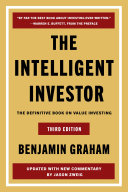
From "The Intelligent Investor Third Edition"
🎧 Listen to Summary
Free 10-min PreviewThe Perils of Alternative Investments and High Fees
Key Insight
Enterprising investors must be vigilant against the allure of 'alternative' assets, such as hedge funds, private equity, venture capital, private credit, and private real estate, which promise superior returns but often involve locking up money for years at exorbitant fees. The financial industry's aggressive promotion of these assets, shifting from high-cost mutual funds and IPOs in earlier decades, is directly correlated with the high fees bankers, brokers, and advisers can earn. Between 2013 and 2022, private funds globally raised 11.7 trillion, generating hundreds of billions in cumulative fees and expenses for managers and marketers.
The cost structure of these funds can be extreme; a leading 'alternative' fund of funds example reveals a maximum sales charge of 3.00% upfront, and annual expenses totaling 7.49%, comprising a 1.20% advisory fee, 0.02% interest on borrowed funds, 1.60% other expenses, and 4.67% from acquired funds’ fees and expenses. While a good return or liquidity might be possible, high fees are a certainty. Promoters argue these funds operate in private markets with longer investment horizons and lower risks, making high fees worthwhile, but this is often misleading. The absence of public trading does not prevent price collapses, as evidenced by venture-capital funds slumping 65% during the early 2000s tech bust and private real-estate funds losing 63% during the late 2000s global financial crisis.
Unlike public markets, which are deep, wide, and foster diverse opinions, private markets are shallow, narrow, and codependent, with participants often sharing similar beliefs and portfolios. This environment can lead to valuations based more on faith and groupthink than on rigorous analysis, as surveys indicate 44% of venture capitalists 'often make a gut decision' and 9% use no financial metrics. Significant fiascos like Theranos Inc. (valued at 9 billion, shut down 2018), WeWork (valued at 47 billion, bankruptcy 2023), and FTX (valued at 32 billion, bankruptcy 2022, founder jailed for stealing billions), all funded by renowned firms that charged massive fees, underscore the severe risks and apparent lack of due diligence in these private markets. Individual investors should approach alternative funds with independence, humility, and skepticism, acknowledging that most institutional investors, including pensions and endowments which have allocated 30% to 60% of their assets to alternatives, have underperformed a simple 70% stock/30% bond portfolio by up to two percentage points annually since 2008.
📚 Continue Your Learning Journey — No Payment Required
Access the complete The Intelligent Investor Third Edition summary with audio narration, key takeaways, and actionable insights from Benjamin Graham, Jason Zweig.