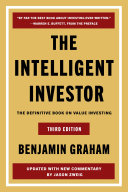
From "The Intelligent Investor Third Edition"
🎧 Listen to Summary
Free 10-min PreviewStrategies for Enhancing Safety and Mitigating Risk
Key Insight
Diversification is logically connected to the margin of safety, ensuring that while an individual security with a positive margin may still perform poorly, increasing the number of such commitments makes it highly probable that aggregate profits will surpass aggregate losses. Modern investors can diversify easily and cheaply over time, by investing steadily for years, and across space, by utilizing index funds holding hundreds or thousands of stocks, including global ones, and by allocating funds to cash, bonds, and other assets. This means a 100% loss on a 5% portfolio holding still leaves 95% diversified, while the upside of any holding is unbounded, like a 1000% gain on 5% of the portfolio yielding a 50% overall gain.
An internal margin of safety is crucial to protect against one's own biases, especially with the abundant information available today, which tends to increase conviction more than knowledge. To build this, investors should convert forecasts from guesstimates to a formal process, treating opinions as hypotheses to be tested, not guarded. This involves auditing information sources for a 'balanced cognitive diet', establishing a reference class (e.g., all companies in an industry), determining a base rate (e.g., 40% divorce rate or IPO returns 1.5 percentage points lower than the overall market) and adjusting it, using checklists for consistent criteria, making specific and probabilistic forecasts (e.g., '80% certain earnings will double'), actively seeking disconfirming information, and continuously updating views with flexibility.
The ultimate way to create a margin of safety is by selling, especially if initial assessments were wrong, preventing total loss. Key strategies for this include: automatically reviewing original buying reasons if a stock drops a fixed amount (e.g., 25%, 33%, and 50%); reappraising business fundamentals for any changes that justify a price decline, not market opinion; repricing by considering if one would hold the asset if purchased at one-tenth of the original price; reflecting on anger at critics as a sign that one's own thesis might be flawed; and reframing losses as opportunities, such as deducting up to $3000 annually from taxable income or improving diversification by reinvesting proceeds into a broad index fund. This approach, similar to Pascal's Wager, emphasizes the critical importance of potential consequences (losses) alongside probabilities (gains).
📚 Continue Your Learning Journey — No Payment Required
Access the complete The Intelligent Investor Third Edition summary with audio narration, key takeaways, and actionable insights from Benjamin Graham, Jason Zweig.