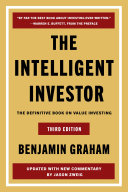
From "The Intelligent Investor Third Edition"
🎧 Listen to Summary
Free 10-min PreviewFailure of Fundamental Security Analysis and Investor Due Diligence
Key Insight
Many financial failures stem from a profound neglect of elementary security analysis principles and sound investment standards. In the case of Penn Central, the country's largest railroad, its 1970 bankruptcy and stock collapse from a 1968 high of 86.5 to a 1970 low of 5.5 could have been foreseen. Basic indicators, such as interest charges earned only 1.91 times in 1967 and 1.98 times in 1968, were far below the required 5 times before income taxes for railroad bonds. Crucially, the company had paid no income taxes for 11 years, invalidating reported earnings and indicating severe financial weakness.
Further red flags were evident: Penn Central's bonds could have been exchanged for far better secured public utility issues at no price or income sacrifice in 1968-1969, a move that would have saved bondholders from default. Its 1968 reported earnings of 3.80 dollars per share, leading to a high price-to-earnings ratio of 24, were dubious given the absence of income tax payments. The 1966 reported earnings of 6.80 dollars per share, which propelled the stock to 86.5, masked a future special charge of 275 million dollars (12 dollars per share) for merger costs. Operationally, its transportation ratio of 47.5 percent in 1968 was significantly worse than profitable competitors.
Modern examples echo these failings: Nikola Corporation, despite having no revenues and not a single vehicle developed, achieved a market capitalization exceeding 30 billion dollars in 2020, momentarily surpassing major carmakers. Its stock surged 136 percent in three days based on hype, ignoring its massive losses and a video purporting to show a truck driving under its own power was actually a film of the truck coasting downhill. Similarly, Peloton Interactive's stock rose 434 percent in 2020, reaching a 38 billion dollar valuation, six times eBay's sales, on the back of a short-term pandemic boom. Speculators ignored the unsustainable extrapolation of growth and the predictable normalization of consumer behavior, leading to a combined 3.9 billion dollar loss over 2021-2022 and stock price declines of 76 percent in 2021, 78 percent in 2022, and 23 percent in 2023.
📚 Continue Your Learning Journey — No Payment Required
Access the complete The Intelligent Investor Third Edition summary with audio narration, key takeaways, and actionable insights from Benjamin Graham, Jason Zweig.