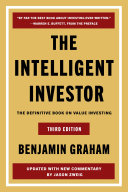
From "The Intelligent Investor Third Edition"
🎧 Listen to Summary
Free 10-min PreviewModern Stock Options: Understanding, Risks, and Strategic Use
Key Insight
Modern stock options, not standardized until 1973, are now widely traded but often misunderstood by millions. An option, derived from the Latin 'optio' for 'choice,' grants the right to buy (call) or sell (put) an asset at a specified price on a fixed date, with a convertible bond essentially embedding a call option. Options function as a form of insurance, with their price known as a 'premium,' allowing investors to reshape risks and returns. While they can lead to significant percentage gains on rising stocks, their value can also plummet to zero if the underlying asset does not perform as expected, making them 'seldom a set-it-and-forget-it investment' and suitable only for 'enterprising investors' capable of deep risk analysis.
The brokerage industry heavily promotes options trading due to substantial financial incentives; for example, Robinhood earned $260 million from options trades in the first half of 2023, five times more than from stock transactions, despite fewer option trades. This push exploits widespread investor ignorance, as evidenced by a 2021 survey where 62% of options traders incorrectly valued a zero-worth option. Such lack of understanding, coupled with the rising popularity of high-volatility zero-days-to-expiration (0DTE) options, leads to significant financial losses. Studies indicate U.S. investors lost $2.1 billion trading options between November 2019 and June 2021, incurring $7.3 billion in brokerage costs, a 'massively wasteful transfer of wealth from Main Street to Wall Street.'
Despite the general risks, options can be used strategically for specific goals. Conservative approaches like selling 'covered calls' on owned stock can reduce risk and generate income, converting uncertain future returns into certain present income by earning premiums. This strategy works best on stocks with moderate returns, and specialized funds have successfully employed it to deliver much of the stock market's gains with less risk and more income. However, simpler and cheaper alternatives exist for risk reduction, such as holding more cash (e.g., earning 5% on money-market funds) or extracting income by selling small portions of a stock portfolio, which also often benefits from lower tax rates compared to covered call income.
📚 Continue Your Learning Journey — No Payment Required
Access the complete The Intelligent Investor Third Edition summary with audio narration, key takeaways, and actionable insights from Benjamin Graham, Jason Zweig.